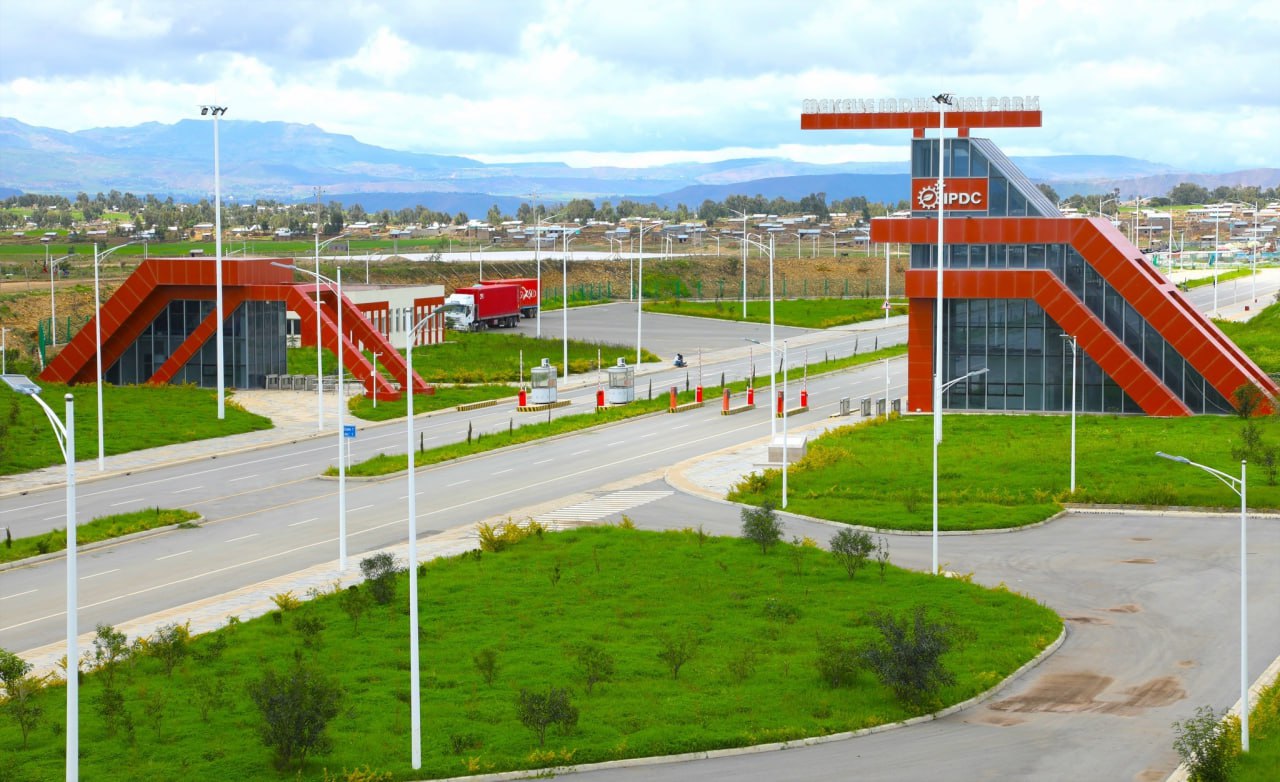
The Industrial Parks Development Corporation has introduced a new policy measure aimed at supporting domestic manufacturers by offering reduced service fees and four years of free access to selected special economic zones, formerly referred to as industrial parks.
The initiative is part of a broader effort to accelerate Ethiopia’s industrialization by helping local investors enter the manufacturing sector more easily, establish production facilities, create jobs, and supply products for both export and domestic markets.
IDPC Chief Executive Officer Fisseha Yitagesu told ENA that the new approach is intended to strengthen the role of local manufacturers in the country’s industrial development. He noted that while foreign direct investment has made an important contribution to Ethiopia’s industrial growth, greater emphasis is now being placed on supporting domestic investors.
According to Fisseha, the corporation is particularly focused on helping small and micro enterprises expand into medium and large-scale industries. He said promoting local investors is essential because sustainable industrial development is mainly driven by domestic participation.
Under the new policy, eligible enterprises will be allowed to operate in selected special economic zones free of charge for four years. They will also benefit from reduced service fees, a measure expected to lower entry barriers for local manufacturers.
The corporation said the policy is already showing encouraging results, with local investors now accounting for more than 65 percent of businesses operating in special economic zones across the country.
Fisseha said integrated infrastructure in the zones, including land, electricity, water supply, telecommunications services, and waste treatment facilities, is helping address one of the main challenges that previously discouraged local investors from entering the manufacturing sector.
He also highlighted the growing participation of youth and women entrepreneurs in special economic zones, adding that stronger collaboration between industry and academia would support skills development, research, productivity, and technology transfer.
The CEO pointed to Kilinto Special Economic Zone’s proximity to Addis Ababa Science and Technology University as an important opportunity for internships, research partnerships, practical training, and university-industry collaboration.
As part of the first phase of the initiative, IDPC recently allocated 10 hectares of fully serviced land to 26 medium-sized enterprises at the Bole Lemi and Kilinto special economic zones. The land is equipped with electricity, water, telecommunications, and sewerage infrastructure.
The initiative is expected to improve production capacity, enhance productivity, and strengthen the contribution of domestic manufacturers to Ethiopia’s industrial transformation.
Source: Ethiopian News Agency