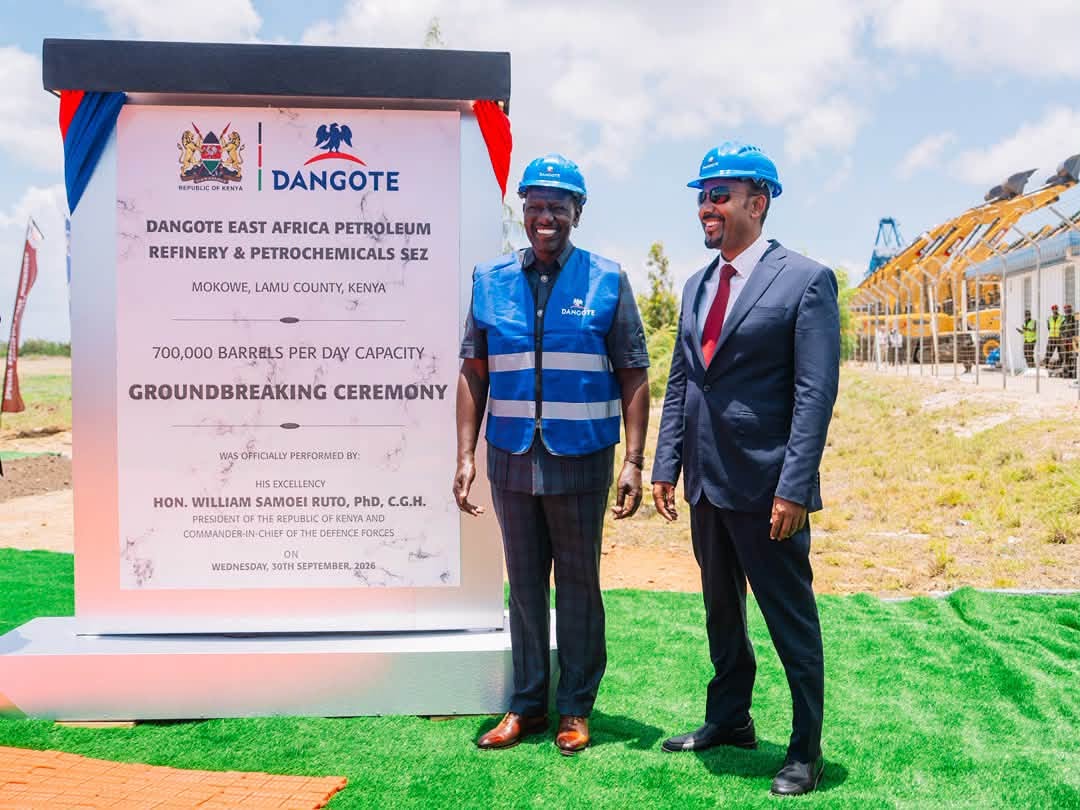
Ethiopia is set to benefit from Kenya’s planned Lamu oil refinery through expanded access to regional refined petroleum supplies and increased opportunities for trade and investment, Prime Minister Abiy Ahmed said during the project’s groundbreaking ceremony.
The ceremony was attended by African heads of state and government, business leaders including Alhaji Aliko Dangote, government officials, ambassadors, and other dignitaries.
Prime Minister Abiy described the refinery project as a major step toward improving energy security and advancing economic integration in East Africa. He highlighted that many African countries have historically relied on fuel refined outside the continent, leaving regional economies vulnerable to global market disruptions and supply uncertainties.
With Africa’s population centers expanding and industrial activity increasing, the Prime Minister emphasized the importance of developing refining capacity closer to regional consumers to establish more reliable and resilient energy supply systems.
The Lamu refinery, he noted, would add significant refining capacity within the region and provide Ethiopia with an additional source of refined petroleum products. The project is expected to broaden Ethiopia’s fuel supply options while creating new avenues for cross-border trade and investment.
Beyond fuel production, the refinery is expected to support the development of related industries and economic activities around the facility. Its strategic location along the Lamu Port-South Sudan-Ethiopia Transport (LAPSSET) Corridor is also expected to enhance regional connectivity by strengthening links between production centers, transport networks, and markets.
Prime Minister Abiy commended Kenyan President William Ruto for advancing an infrastructure project with regional significance, noting that investments of this scale can contribute to deeper economic cooperation among neighboring countries.
He also recognized Alhaji Aliko Dangote’s involvement in the project, highlighting his experience in establishing large-scale industrial ventures across Africa, including investments in cement, fertilizer, and petroleum refining.
Addressing business leaders, the Prime Minister emphasized the need for East Africa to develop not only as a consumer market but also as a hub for production, manufacturing, and value creation.
He said the broader impact of major industrial projects should be measured by the opportunities they generate, including technology transfer, enterprise development, skilled employment, and the creation of pathways for young Africans to participate as professionals, entrepreneurs, and industry leaders.
Prime Minister Abiy said cooperation between governments, private sector actors, and regional partners can help transform Africa’s productive capacity and reduce dependence on external sources for essential goods.
The Lamu refinery project, according to the Dangote Group, represents a major milestone in Africa’s industrial development. Valued at approximately USD 16 billion, the planned facility is expected to have a refining capacity of 700,000 barrels per day and contribute to expanding Africa’s ability to produce petroleum products within the continent.
Source (including image): Ethiopian News Agency