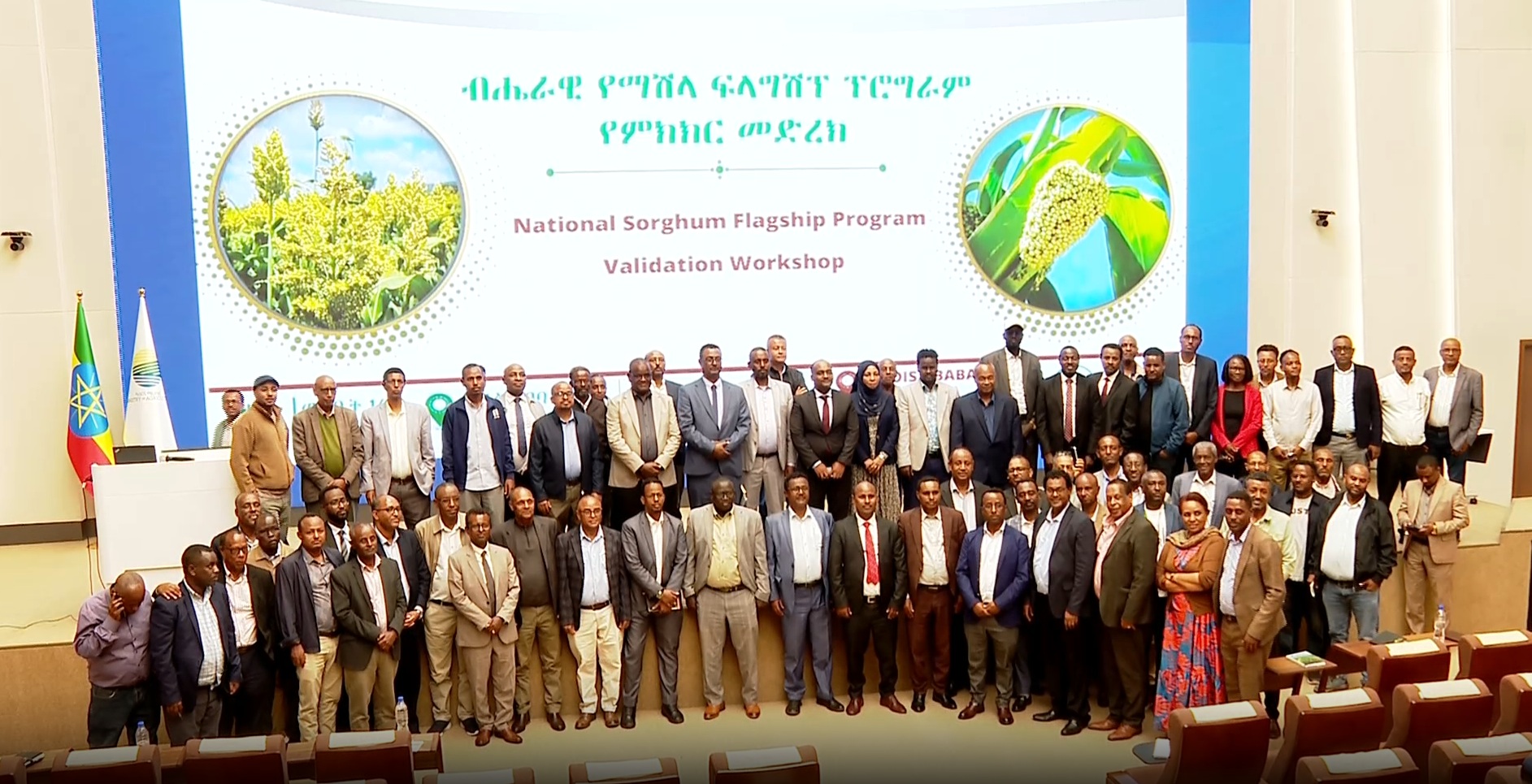
Ethiopia has launched a national program aimed at expanding sorghum production as part of a broader effort to improve food self-sufficiency, reduce dependence on grain imports, and support agro-industrial development.
The initiative was presented during a National Sorghum Flagship Program validation workshop held in Addis Ababa, where farmers, researchers, and development partners gathered to review a strategy focused on making better use of the country’s land, water resources, and sorghum varieties.
A central part of the plan is the improvement of the sorghum value chain through the use of better seed varieties and modern agricultural technologies. The program is also expected to support import substitution by linking sorghum production more closely with industries such as beverage manufacturing and poultry production, while also creating wider economic opportunities in rural areas.
Officials at the workshop said the initiative reflects a broader shift toward treating staple crops not only as sources of food, but also as inputs that can support industrial growth and local income generation.
The Ministry of Agriculture noted that sorghum remains one of Ethiopia’s main food grains, despite continued policy focus on crops such as wheat, oilseeds, and rice. It continues to play an important role in household consumption and in the country’s wider food system.
The new program is expected to guide future efforts to increase sorghum output and strengthen its role in both food supply and industrial use.
Source (including image): Ethiopian News Agency