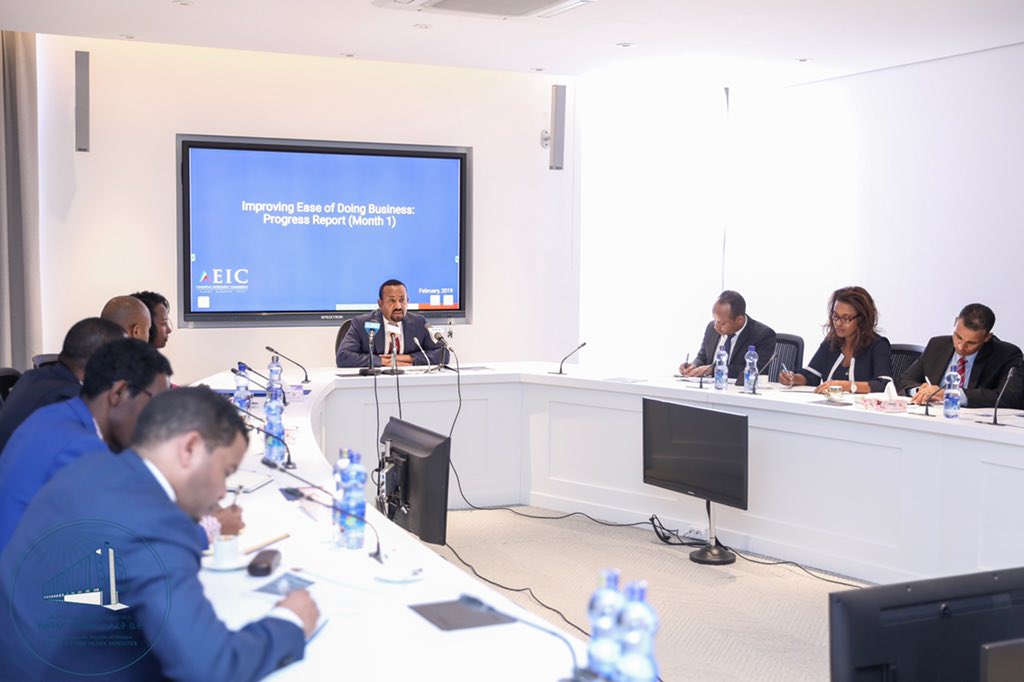
 Ethiopia’s focus on improving ease of doing business continues under the economic reforms the country is going through. The move, the Prime Minister’s office states, is to help create a conducive environment for businesses to start up and to also have access to finance.
Prime Minister Abiy Ahmed chaired a one-month performance review of the doing business initiative. At the review session, the prime minister pointed out that the result of a good business atmosphere and finance will be a “means of tackling structural problem of unemployment.” He further stressed that in addressing access to finance problems faced by many startups, a revision of lending practices which allows putting up movable assets as collateral is being put in place.
As part of the wider economic reforms initiated since Prime Minister Abiy Ahmed came to power, the government has vowed to further open up the economic space to more private sector involvement, and lessen state monopoly. In conjunction, Ethiopia’s National Bank has revised some restrictive measures on loans and the general financial system.
On a tweet, the Prime Minister’s Office disclosed ten key indicators in which the rating of improving Ethiopia’s ease of doing business focused on:
1. Starting a business
2. Construction permits
3. Registering property
4. Getting electricity
5. Getting credit
6. Paying taxes
7. Trading across borders
8. Resolving insolvency
9. Protecting minority rights
10. Enforcing contracts
“Prime Minister Abiy Ahmed stressed that cutting bureaucratic bottlenecks in these processes will enable focus investment areas of electricity, mining, housing, manufacturing and Small and Medium Enterprises (SME’s) to be effective,” his office further noted in a subsequent tweet.
Top Image: Prime Minister Abiy Ahmed Chairing the 'Doing Business Initiative' Review Session
Sources: Twitter Page of Office of the Prime Minister - Ethiopia, Africa News
Image Source: Twitter Page of Office of the Prime Minister - Ethiopia